Spanish Exercises for Adult Learners: Practice Plan
Start with a 20-minute sentence-level grammar workout every day. That single habit, built around CEFR-aligned levels A1 through C1, is the fastest path from…

Start with a 20-minute sentence-level grammar workout every day. That single habit, built around CEFR-aligned levels A1 through C1, is the fastest path from knowing Spanish rules to using them without thinking.
Here is what an effective daily session looks like:
- 5-minute warmup: Quick conjugation recall, one tense, full sentences out loud
- 10-minute core drill: Sentence-level gap-fills or transformation tasks targeting your current CEFR level
- 5-minute review: Revisit every error from the session, repeat those specific items twice more
- Time commitment: 20 minutes daily beats 2-hour weekend marathons every time
- Evidence anchor: CEFR-mapped drills with immediate feedback, as used by platforms like Gramanator, build the automaticity that isolated vocabulary apps cannot
Table of Contents
- What Spanish exercises should you do at each CEFR level?
- Core grammar topics every adult learner needs to drill
- How to practice Spanish effectively as an adult learner
- Where to find Spanish grammar exercises and how to choose
- Why cultural context makes grammar exercises stick
- How to self-assess your progress and adapt based on errors
- How to integrate speaking and writing alongside grammar drills
- How multimedia improves your listening and pronunciation
- Key Takeaways
- Gramanator: the Spanish Grammar Gym for serious adult learners
- Useful sources and further reading
What Spanish exercises should you do at each CEFR level?
The CEFR framework maps grammar complexity in a clear progression, so you never waste time drilling subjunctive when you still confuse ser and estar. Each level has a natural exercise focus.
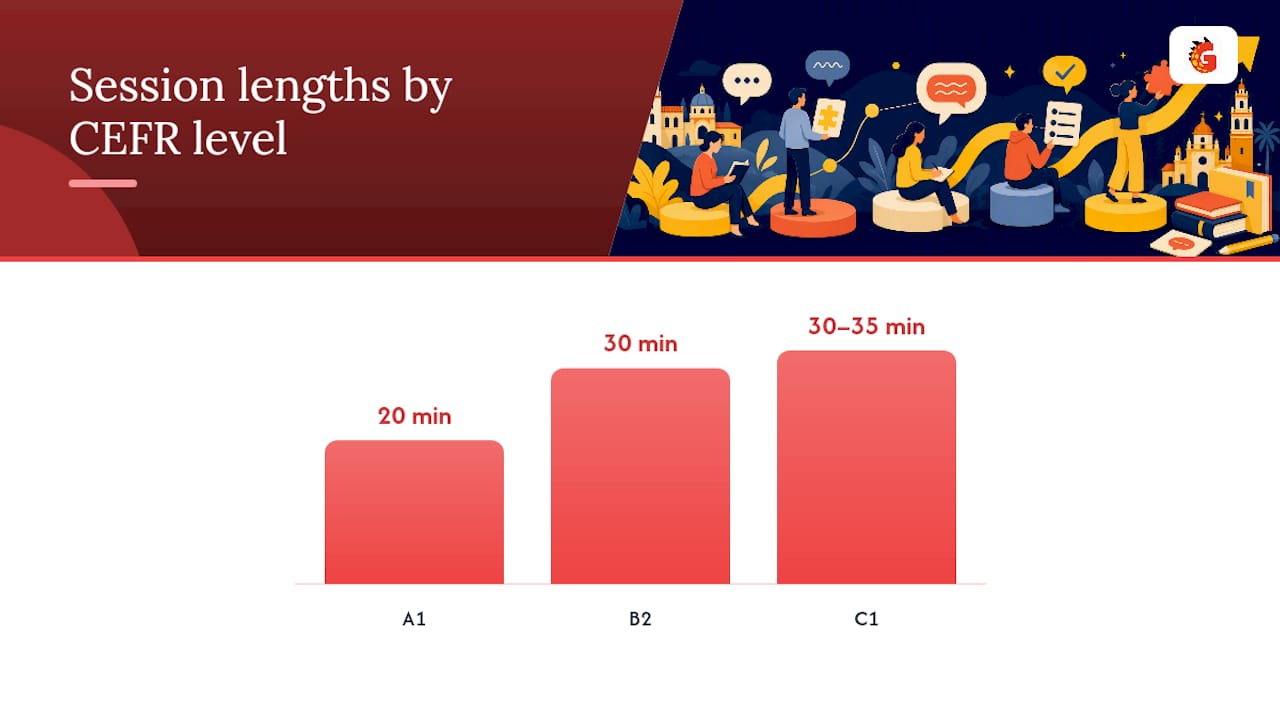
| Level | Core Grammar Topics | Best Exercise Types | Session Length |
|---|---|---|---|
| A1 | Articles, noun gender, plurals, present tense | Gap-fill, matching, picture-based sentence completion | 20 min |
| A2 | Reflexive verbs, common irregular verbs, basic adjective agreement | Sentence transformation, guided conjugation drills | - |
| B1 | Preterite vs. imperfect, por vs. para, pronouns | Contextualized gap-fill, timed conjugation, short writing tasks | - |
| B2 | Subjunctive (present), conditional, complex sentence structure | Sentence restructuring, conditional tense drills, audio gap-fill | 30 min |
| C1 | Subjunctive (past), sequence of tenses, advanced connectors | Full-sentence transformation, listening + gap-fill, timed workouts | 30-35 min |
A few notes worth keeping in mind as an adult learner:
- Always practice in full sentences, not isolated verb forms. “Ella habló con su jefe” (She spoke with her boss) trains your brain differently than writing “habló” alone.
- Use mistake-focused repetition: when you get an item wrong, repeat that exact item two or three times before moving on.
- At B2 and C1, add at least one audio-based task per session. Real-speaker input at those levels closes the gap between reading grammar and hearing it.
Core grammar topics every adult learner needs to drill
Spanish grammar has a handful of topics that trip up nearly every adult learner. Matching each one to the right exercise format is what turns study time into real progress.
- Articles and noun gender (el/la, un/una): gap-fill sentences with missing articles; read each completed sentence aloud. Spanish noun phrases are a good place to start.
- Pronouns (direct, indirect, reflexive): rewrite sentences replacing nouns with pronouns; StudySpanish.com’s grammar section pairs explanations with exercises that reinforce this well
For verb conjugation specifically, sentence-level verb drills that ask you to read each answer aloud build spoken automaticity faster than silent written practice.
Pro Tip: Instead of reviewing all your errors at the end of a week, group them by type. If you missed four ser/estar items and two preterite/imperfect items, build a 5-minute mini-drill targeting only those two patterns. Targeted repetition beats broad review every time.
How to practice Spanish effectively as an adult learner
Grammar is a foundation, not the finish line. The goal is automatic recall, and that requires a structured weekly rhythm, not random practice sessions.
The core principle: short daily sessions plus one longer weekly review outperform any other schedule for adult learners.
Sample weekly plan:
- Monday: 20-min session, present tense and reflexive verbs, sentence-level gap-fills
- Tuesday: 20-min session, preterite conjugation drills, read every sentence aloud
- Wednesday: 20-min session, ser vs. estar contextualized gap-fills, 5-min error review
- Thursday: 20-min session, audio gap-fill (B1+) or guided writing task (A1-A2)
- Friday: 20-min session, sentence transformation targeting your current weak point
- Saturday: 35-min review session: revisit every error from Mon-Fri, run targeted mini-drills on your two most frequent error types
- Sunday: Rest or light listening (a short Spanish podcast or video clip, no active drilling)
Building your feedback loop:
- Log three things after every session: the grammar topic, your accuracy estimate, and your two most common error types
- After one week, identify your grammar weaknesses by scanning your error log for patterns
- Build Saturday’s review around those patterns, not a random topic
What to track each session:
- Error type (conjugation, agreement, tense selection, word order)
- Accuracy on new items vs. repeated items
- Practice streak (consistency is a stronger predictor of progress than session length)
The CEFR framework signals when to shift focus: once you hit roughly 80% accuracy on a level’s core topics, move up. Staying too long at one level is one of the most common adult-learner plateaus.
Pro Tip: When you plateau, the problem is almost never effort. It is usually that you are drilling topics you already know. Pull your error log, find the two grammar points with the lowest accuracy, and spend the next two weeks drilling only those.
Where to find Spanish grammar exercises and how to choose
Not all resources are built the same way. Here is what each type offers and where it falls short.
- Free exercise banks (e.g., Espanido, Lingolia): broad topic coverage, good for targeted grammar points, limited personalization
- Conjugation drill sites (e.g., SpanishEnglish.com): solid for focused tense practice, but mostly isolated forms rather than full sentences
- University collections (e.g., LAITS Spanish Proficiency Exercises): real-speaker audio and video clips, excellent for B1+ listening practice, less structured for grammar drilling
- Library portals (e.g., Denver Public Library’s Spanish Practice Online): aggregate multiple resources, sometimes include subscription platform access via library card at no cost
- Subscription platforms: structured CEFR paths, immediate feedback, mistake-focused repetition, progress tracking; the strongest option for adult learners who want measurable progress
Selection checklist before committing to any resource:
- CEFR-aligned levels so you know where you stand
- Sentence-level drills, not just isolated conjugation
- Immediate feedback with grammar explanations, not just correct/incorrect
- Mistake-focused repetition that brings back your errors
- Audio or video for listening practice (critical at B1+)
- Progress tracking so you can see patterns over time
Pro Tip: In the first 20-30 minutes of any free trial, run three tests: pick a topic you know well, a topic you find hard, and a topic you have never studied. A good platform gives you useful feedback on all three. If it only rewards what you already know, it is not built for your growth.
For learners planning structured study in Spain, regional education differences can affect which grammar register and vocabulary you encounter in immersion settings.
Why cultural context makes grammar exercises stick
Grammar rules learned in isolation tend to fade. The same rule practiced inside a real-life scenario sticks. When you drill por vs. para using a sentence like “Este regalo es para mi jefa” (This gift is for my boss), you are not just learning a preposition rule. You are encoding a workplace situation your brain can retrieve later.
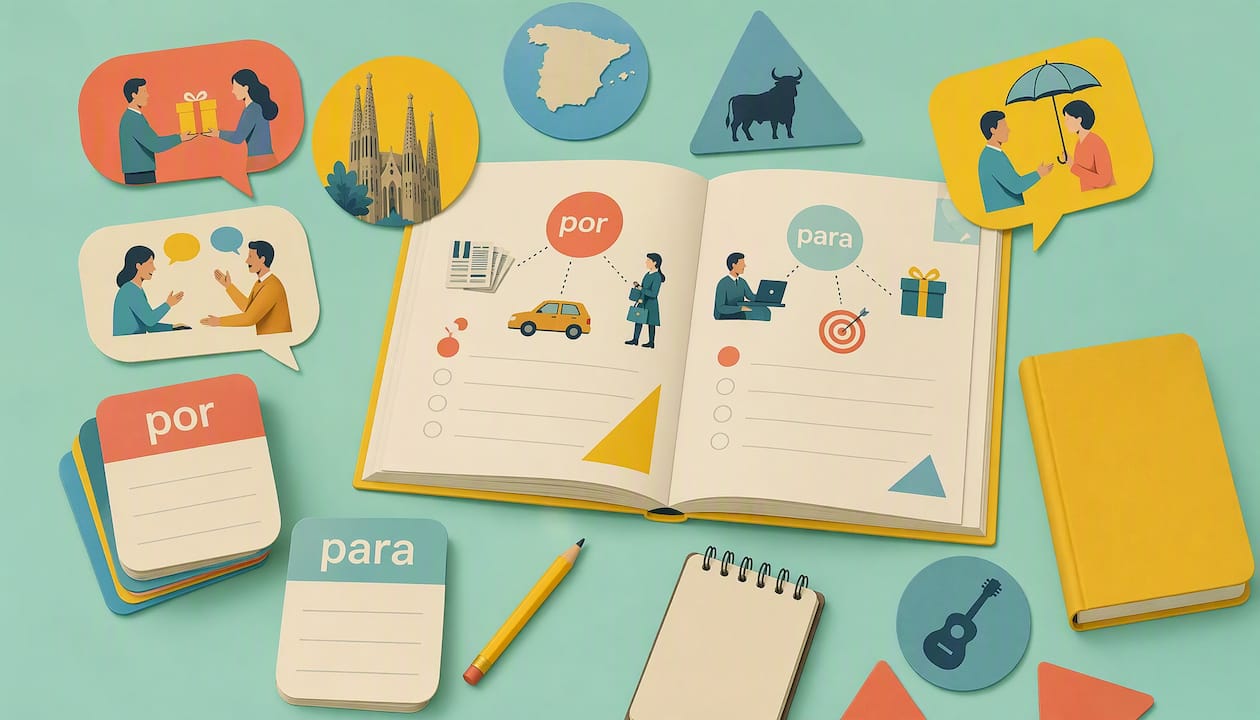
The most effective exercise banks build cultural context into every sentence. Workplace communication, travel situations, and everyday social interactions give grammar a purpose. That purpose is what converts passive knowledge into instinctive use.
How to self-assess your progress and adapt based on errors
Self-assessment does not require a formal test. After each session, ask yourself three questions: Which items did I get wrong? Was it the same type of error as last time? Did I hesitate on items I have drilled before?
Hesitation is as informative as a wrong answer. If you pause before choosing between fue and era, the pattern is not automatic yet. Log it the same way you log an error.
Every two weeks, review your log and look for clusters. Three or more errors of the same type (tense selection, pronoun placement, agreement) signal a gap that targeted drills can close. The Gramanator blog has practical guides for diagnosing and fixing specific grammar gaps if you want a structured approach.
How to integrate speaking and writing alongside grammar drills
Grammar drills build the foundation. Speaking and writing are where you test whether the foundation holds. The two work best when they run in parallel, not in sequence.
After any conjugation or transformation drill, read your answers aloud. This one habit, recommended consistently by grammar-focused resources, closes the gap between written accuracy and spoken fluency faster than any other technique. Your mouth needs to practice the patterns your brain has learned.
For writing, keep a short daily journal in Spanish: three to five sentences using the grammar point you drilled that day. You do not need a tutor to correct it. Read it back the next morning and flag anything that sounds wrong. That self-editing process trains your internal grammar monitor.
How multimedia improves your listening and pronunciation
Audio and video practice serve a different function than written drills. They train your ear to recognize grammar patterns at natural speech speed, which is where most adult learners struggle.
The LAITS Spanish Proficiency Exercises collection from the University of Texas offers short real-speaker video clips with comprehension tasks, making it one of the strongest free resources for B1+ learners. Pair a clip with a gap-fill task: listen once for meaning, then listen again to complete the gaps. That two-pass method builds both comprehension and grammar recognition simultaneously.
For pronunciation, shadowing works well. Play a short audio clip, pause it, and repeat the sentence immediately, matching the speaker’s rhythm and intonation. Ten minutes of shadowing three times a week produces noticeable improvement within a month.
Key Takeaways
Consistent, sentence-level Spanish grammar drills aligned to your CEFR level, combined with mistake-focused repetition and weekly error review, build the automaticity that turns study into real conversation.
| Point | Details |
|---|---|
| Match exercises to your CEFR level | Drilling the wrong level wastes time; use the A1-C1 map to pick the right topics. |
| Always drill in full sentences | Isolated conjugation does not train speech; sentence-level practice builds automaticity. |
| Track and target your errors | Log error types after every session and build mini-drills around your two weakest patterns. |
| Add audio from A2 onward | Listening tasks train grammar recognition at real speech speed, closing the gap to fluency. |
| Gramanator for structured training | Gramanator’s CEFR-aligned drills, mistake-focused repetition, and progress tracking match every criterion in this practice plan. |
Gramanator: the Spanish Grammar Gym for serious adult learners
If you have read this far, you know what a strong practice resource needs: CEFR alignment, sentence-level drills, immediate feedback, mistake-focused repetition, and progress tracking. Gramanator is built around exactly those criteria.
Gramanator is the platform for adult learners who are done accumulating vocabulary and ready to train grammar until it becomes instinct. It is not a casual app. It is a structured grammar gym with 10,000+ drills running from A1 to C1, daily personalized workouts, real-life Spanish contexts (workplace, travel, everyday interactions), and a mistake-focused repetition engine that brings your errors back until they stop being errors. Progress tracking shows you where your accuracy is improving and where you still need reps.
Start a free trial on Gramanator and run the same 20-minute diagnostic workout described in this article. You will know within the first session whether it fits your practice plan.
Useful sources and further reading
The table below lists the authoritative CEFR reference and the most useful exercise resources for adult learners, organized by type.
| Resource | Type | Best For |
|---|---|---|
| Council of Europe CEFR | Framework reference | Understanding level descriptors and mapping your practice |
| LAITS Spanish Proficiency Exercises | University collection | Real-speaker audio/video tasks for B1+ listening practice |
| Lingolia Spanish Grammar | Grammar + exercises | Targeted practice on specific grammar points with explanations |
| SpanishEnglish.com Verb Practice | Conjugation drills | Fill-in-the-blank tense practice across present, preterite, imperfect, and subjunctive |
| Denver Public Library Spanish Practice | Library portal | Free and low-cost resource access, including subscription tools via library card |
CEFR is the organizing standard behind every recommendation in this article. When you know your level, every resource in this table becomes easier to use because you know exactly which section to open first.